
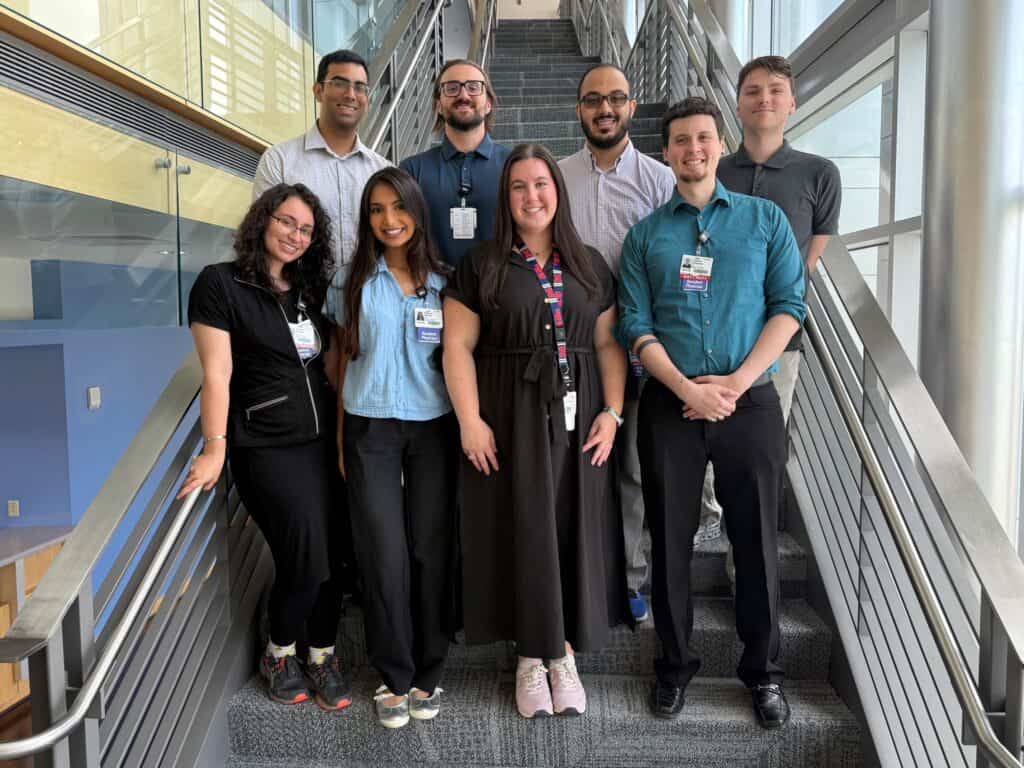
For many people, summer is synonymous with vacations, relaxation and a break from the daily grind. But for the Psychiatric Research Institute’s newest class of trainees, summer is about embarking on one of the most challenging and rewarding experiences of their careers.
July 1 marked the beginning of a new chapter for PRI’s incoming residents, interns and fellows. While some arrived already familiar with the campus, others were experiencing it for the very first time. Guided by PRI’s faculty and staff, these new trainees took their first steps in their journeys toward careers dedicated to advancing mental health care and research.
The Department of Psychiatry welcomed eight new residents earlier this year, two of whom are graduates of UAMS’ College of Medicine. Kathryn Kelly, M.D., and Kasturi Sarkar, M.D., both of Little Rock, graduated from UAMS in May. They joined Varesh Gorabi, M.D., of the University of Texas Medical Branch at Galveston, Abdel-Nabi Hadi, D.O., of the Kansas City University College of Osteopathic Medicine, Nicholas Hancock, M.D., of the Texas Tech University Health Sciences Center’s School of Medicine, Joshua Hoepner, M.D., of the University of Texas at San Antonio Health Science Center, Zach Monahan, D.O., of the Oklahoma State University College of Osteopathic Medicine and Venu Reddy, M.D., of the University of Alabama at Birmingham’s Heersink School of Medicine.
Over the course of their four-year training, the residents will rotate through a diverse array of clinical settings, gaining experience with patient populations at UAMS Medical Center, the Arkansas State Hospital, the Central Arkansas Veterans Healthcare System, Arkansas Children’s Hospital and the Psychiatric Research Institute. In addition to developing core competencies in general psychiatry, the residents will also gain experience working with specific populations, including child and adolescent, forensic, addiction, reproductive, and geriatric psychiatry.
“We’re excited to welcome this outstanding group of residents to UAMS. Each of them brings unique experiences and perspectives, but they all share a genuine passion for psychiatry, a commitment to patient care and a desire to keep learning,” said Abigail Richison, M.D., the training director for the Psychiatry residency program. “We’re also thrilled they chose UAMS because of our supportive culture, diverse clinical training and the close relationships they’ll build with our faculty and fellow residents. We can’t wait to watch them grow over the next four years!”
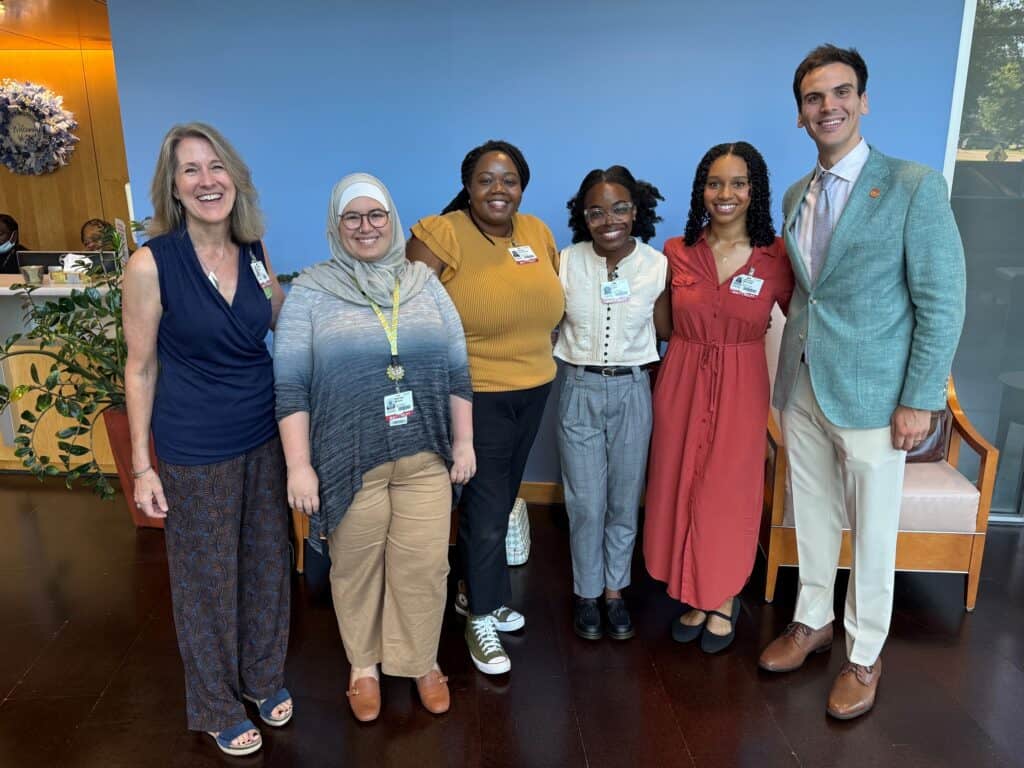
PRI’s Psychology division, meanwhile, took on five new interns for one-year internships. Nasreen Moursi, MS, of Uniformed Services University of Washington, D.C., and Jasmine Merlette, MA, of the Chicago School of Washington, D.C., will be working on the Child track. Emily Allen, MA, of the University of Arkansas at Fayetteville, will be on the Integrated Health Care track while Whitman Kent, MA, of Wheaton College will be on the Neuropsychology track and Kathryn Armstrong, MS, of the University of Central Arkansas will be on the Trauma, Recovery, Justice track.
The Child track provides interns with specialized training in the evaluation and treatment of traumatic stress among children and adolescents, employing evidence-based assessment and intervention models. Moursi and Merlette will complete clinical placements at the PRI Child and Adolescent Behavioral Health Center as well as PRI’s Child Diagnostic Unit.
The Integrated Health Care track prepares future psychologists to function within dynamic multidisciplinary teams while serving diverse patient populations. Allen will work with medically complex adult patients through rotations in trauma surgery, primary care, the Arkansas Children’s Hospital burn unit, and the UAMS organ transplant programs. The Neuropsychology track is designed for trainees pursuing careers in academic neuropsychology, with an emphasis on clinical service, research, and education; Kent’s work will focus on cognitive assessment and intervention.
The Trauma, Recovery, Justice track addresses the psychological needs of individuals involved in the criminal justice system, particularly those who have been arrested or incarcerated. Armstrong will work with PRI’s HEALS Lab, which aims to improve emotional and behavioral health outcomes among incarcerated populations.
All psychology interns possess prior experience in their respective areas of clinical focus, explained Jennifer Gess, Ph.D., the division’s training director. Applicants are drawn to the program specifically for its areas of specialization, Gess said, citing childhood trauma as one example of a particularly strong match between applicant interest and program focus.
She noted that the interns will gain the kind of extensive clinical experience available only at UAMS, including direct work with high-risk and medically underserved populations. As a final requirement of their doctoral degree, trainees must complete a 2,080-hour clinical internship.
“We throw them in the deep end when they get here,” said Gess, “but they can handle it,” a reflection on the program’s emphasis on early hands-on clinical exposure and the strength of the interns who train here.