
The Psychiatric Research Institute launched a statewide initiative to expand Arkansas’ capacity to provide evidence-based substance use disorder (SUD) treatment for adolescents this summer.
Funded by the federal State Opioid Response (SOR) grant administered by the Arkansas Department of Human Services’ Office of Substance Abuse and Mental Health, the Six Bridges Adolescent Substance Use Treatment Program was created to ensure that providers across the state have the specialized skills needed to care for young people and their families.
“The trainings offered through SOR gave Arkansas a unique opportunity to address substance use disorders among children and young adults by building provider capacity. Young people are starting to use substances at earlier ages, so the gaps in prevention and treatment urgently need to be addressed,” said Srinivasa Gokarakonda, M.D., who led the project. “According to the 2024 Arkansas Prevention Needs Assessment Survey, the average age at which young people started vaping fell from 14 in 2018 to 12.8 in 2024. We need to sustain and expand on these trainings to prepare providers to reach young people sooner and to meet the needs of a younger at risk population.”
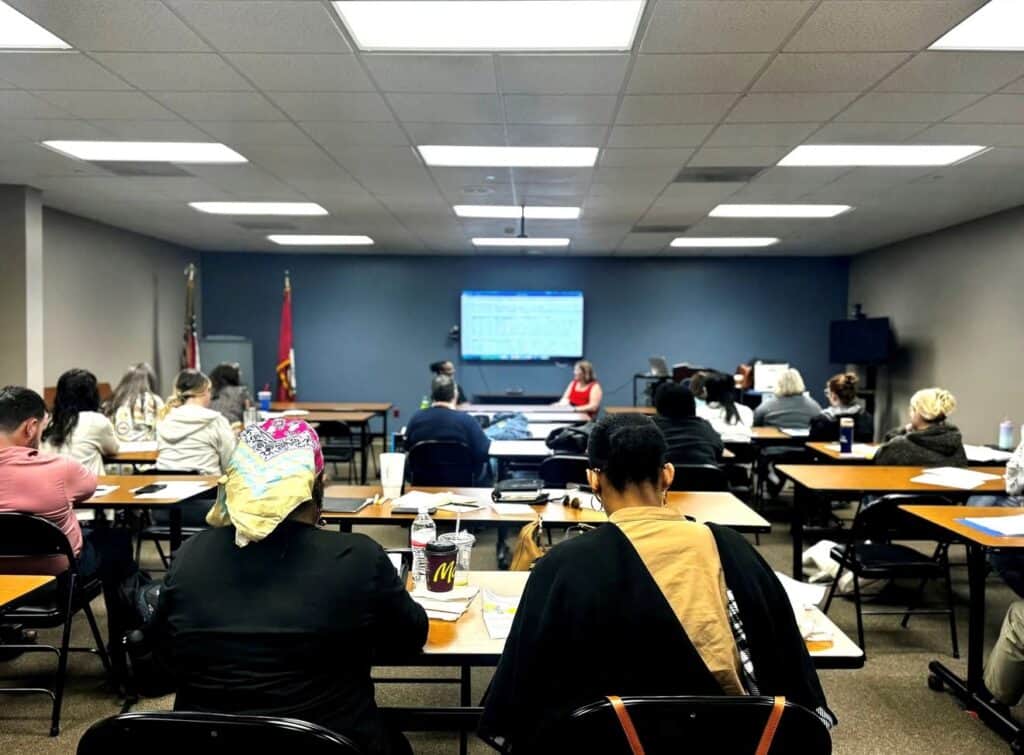
The training sessions, offered at no cost to the participants, were conducted both online and in person. The primary audience was health professionals that work with adolescents, primary care providers, nurses, therapists, school counselors, etc.
A total of 17 full-day courses were held between July and September, with 215 participants from over 50 organizations from 22 counties around the state. Representatives from UAMS, Unity Health, the Department of Human Services’ Division of Youth Services, Arisa Health and numerous school districts took part in the training sessions, held in Searcy and Little Rock.
The training sessions, conducted by Robert J. Meyers Ph.D. and Associates of New Mexico and Train for Change of Carson City, Nev., provided basic information as well as advanced techniques for treating and preventing substance use among adolescents.
Jim Shenep, a career banker and member of the Psychiatric Research Institute’s community advisory board, had a simple reason for taking part in one of the two-day training sessions, conducted at the University of Arkansas – Pulaski Technical College in Little Rock.
“Because it was offered,” he said.
In order to better communicate to the community the importance of the training program, Shenep sat in on one of the sessions.
“I wanted to know more about this process, how counseling can change an adolescent’s mind about whatever substances they are dealing with, change the way they think about their habits and the way they do things,” said Shenep. “The training covered everything you could imagine. It provided a guide for anyone on how they can live their life, a positive way on how you can relate to others.”
Besides the training sessions, the Six Bridges program is also developing a library of online modules covering motivational interviewing, trauma-informed care, and relapse prevention so providers statewide can build skills on their own schedule.